Our Personal Experience of Living with a Wood Burning Stove

By Andy the stuff doer

This Guide and Analysis is for anyone looking to purchase a wood burning stove.  My views are totally independent and give a balanced opinion of the realities based on personal experience.  It’s the kind of information that  manufacturers and suppliers don’t focus on.   

If you are thinking about buying a wood burner or multi fuel stove then this is worth a read.

We’ve been runing a stove now for over 2 years.  From our experience, I’ve reviewed and analysed the choice we made to Live with a Wood Burning Stove.

I’ve tried to answer the question.  Is Living with a Wood Burning Stove worth it?

Looking at the money side, the environment aspects and the lifestyle change in some detail leads me to answer “YES it’s worth it”.

Have a read through and see if you agree with my conclusions. Please leave me any comments, suggestions or queries. 

<< Read – Wood Burning Stove – Is it Worth it?>> Includes my wood burning stove running costs.

<<Leave a response>>

And..  Feel free to link to the article if you think others out there may find it interesting. 

Thanks,

Andy

Getting the right AdWords

By Andy the stuff doer

Now I’ve got a few pages of content up and a tiny trickle of traffic.

With some Traffic I should eventually get some Clicks on the AdWords BIG BUT…The Adverts that AdWords is putting up don’t relate directly to the content. So they are not relevant and won’t get clicks.

The content is about “Buying Timber” <view it here> so I thought I’d get adverts from timber suppliers. I’m getting more for timber windows and joinery companies.  I needed to figure out how the AdWords are targeted.

But first, I did a check to see if there are any relevant advertisers out there. I did some searching directly on Google and found there are a few.  These are the few I want to get next to my content.

So how does Google decide which adverts to put up?

It’s keyword based, with some kind of adjustment for the the value of adverts. By this I mean, if  Google and myself can make more per click using a less frequent Keyword, then that advert will come up first.

To try and get the right AdWords up I’ve done two things.

1.   Used Section Targeting

I’m getting adverts for timber windows. This must be been picked up from a navigation link to my Sliding Sash  Window Blog. I’ve now used section targeting so the AdWords robot will put more weight on the intended page content.

To do this Ive added the following to my page template in the HTML code (to modify all the pages)

<!– google_ad_section_start –>     This placed before the text

<!– google_ad_section_end –>    This is placed after the text

There is another command that can be used.

<!– google_ad_section_start(weight=ignore) –>  I might add this in as well before the navigation menu

I also need to see if  I know need to but the start and end around the meta data in the header. To get that looked at.

2.  Tweaking Content

I’ve gone through the content and attempted to increase the Key-Word density. Concentrating on “Timber Merchant”.  This is tricky as I want the text to get clunky, to has to easily readable.

The crawler robots put more emphasis on Headings, bold text and italics. I’m going to have another sweep through and see what difference it makes.

So far there has been a slight improvement in the advert relevance but it’s not good enough yet. Google states it can take up to two weeks for the Section Targeting to take effect.  In the mean time I’ll keep tweaking but I’m going to need patience.

Affiliate Advertising

By Andy the stuff doer

This is where I’m starting to get serious. AdWords is one thing but if I can find the right advertisers with the right products I should be able earn good commissions on the introductions.

So, maybe a beginner at woodworking  will be looking for a supplier of tools and equipment. I have to find the right suppliers with the right offers and advertise them alongside my content.

To this end I’ve been looking at various Affiliate networks and I’ve signed up to a couple.

Note of Caution: The terms and conditions need a good read through. I spotted a point about an inactivity charge. If the adverts don’t work then after six months I’ll have to start paying the affiliate network a monthly charge.

However I have total confidence that this will work out well. There’s no point bothering otherwise. It gives me a stick as well as a carrot to make sure it works.

I’ll be doing some more research, picking some affiliate programs and adding them in.  With careful monitoring and adjustments planned I’ll be learning a lot as I proceed.

Getting some Traffic

By Andy the stuff doer

It’s OK having quality content but if no-one finds it then no-one will be clicking on the AdWords.

So far I’ve got a two pronged strategy.

First – Organic “Google” search traffic. I’ve read up about optimising pages to improve search.  I’ve done a bit of that. Including:

  • Giving the pages individual titles.
  • I’ve still got to add tags in to meta data. 
  • The Site-map has been and submitted to Google Webmaster
  • The text is written with consideration to possible Keywords
  • There’s a few inbound links already in place

Second – I’ll be changing my profiles on forums and spending some time chipping into threads when I’ve got something useful to contribute. I’m going to be looking for like minded folks where we share common interests and could share links. 

I’ve yet to get my head round feeds, twitter, facebook etc. but I’ll be getting around to it.

Cloning Pages, Growing the Website

By Andy the stuff doer

With the Home page in something like a reasonable format, I’m ready to start adding some content/pages.

I could just copy the home page, rename it and change the content. With dream-weaver there is an easier way.

Dreamweaver Templates

Saving the home page as a template allow me to click on New, pick the template and just change the content I’ve specified as editable.

This has the advantage that I can change the template and all the pages based on it will automatically change. This will be a big time saver when I’ve got loads of pages.

With this in place I quickly created 18 pages of content from text I’d written in Word.  Simple text links then give the navigation.

Now I’ve got something that looks Like a proper Website.

Adwords in Header, Pimp my Website

By Andy the stuff doer

Well I don’t think it will be turning many heads yet but it’s a start. I’ve got some adwords on and after many hours, got them on in the right place.

It might seem like a simple thing to do, I dare say it is now I know how to do it. Getting to that stage however involves getting to grips with the very basics of CSS scripting.

There’s a million and one tutorials out there but non I can find address the needs of novice like me. I think they are mostly written by experts who assume your vocabulary is the same as theirs.  I found my self skipping around having to research particular words used in different contexts.

If I can remember what its like for a beginner when I’m an expert. I should have a go at a tutorial.

In the mean time I’ll just jot down how I got the adwords to be positioned correctly.

I had a  problem positioning  the Adwords banner it in the header.  

I eventually defined a new “div” (that’s a division or as I like to think of it a “box”) this is done on the CSS style sheet. Using the code:

#header_ad1 {
 background-color: #99F;
 height: 60px;
 width: 468px;
 position: absolute;
 top: 15px;
 right: 0px;

The HTML page then calls the division up with the code:

<div id=”header_ad1″>_______</div>

And then I put the Adwords in the “box”  (where the line is)

Simple really!  After 4 hr’s research. 

Dream weaver can automate the code creation and addition to CSS Style sheet.  Making the right choices is a mystery though, unless you know what its actually doing.

Beginners Guide to Buying and Preparing Timber

By Andy the stuff doer

I’ve put this guide together to help beginners, just like I was a couple of years back. It covers the kinds of questions that can be embarrassing to ask as they seem so basic.  If you are starting out on some serious wood working, carpentry or joinery, it will help you avoid some of the mistakes I’ve made.

The kind of questions covered:

  • What timber / wood to buy?
  • What is Redwood?
  • What is White wood?
  • What grade of timber to buy?
  • What do timber grades mean?
  • What is rough saw, PSE, PAR?
  • What Timber sizes are available?
  • What to look for when buying timber?
  • Where is the best place to buy timber?

When you’ve got your wood you don’t want to dive straight in and make something. The timber needs preparing and acclimatising properly. This is another area that doesn’t seem to be covered in an easily available format so I’ve covered the basics:

  • Preparing timber for final seasoning and acclimatising
  • Acclimatising timber and How Long for?

The final stages gets the timber flat, straight square and true using a bench / table saw or band saw and planer – thicknesser.

  • Cutting and planing timber to final sizes
  • Cutting and planing warped and distorted timber
  • Planing twisted, winding, bowed, springing and diamond timber

I hope you find this guide useful –

 < Beginners Guide to Buying and Preparing Timber>

Please use the responses / comments below to let me know how the guide works for you, suggest additions, corrections or criticisms.

Thanks

Andy

Trike Suspension Trial in Wood!

By Andy the stuff doer

Quick background to this little project.

We’ve had an idea for a Trike for a few  many years now. A friend has bet me £20 he will finish a wooden bike before I’ve got the Trike done. So now the race is on.

The Trike is unusual as it’s bike based but will carry 3 passengers. It’s also going to have suspension!

Here’s a quick look at how my working  wooden model of the Trike suspension works. Bungee and beer can shocks. Hee Hee.

Thanks Dave for the rough road simulation.

With my friend concentrating on “Safety First” I think I’ve got a good chance.

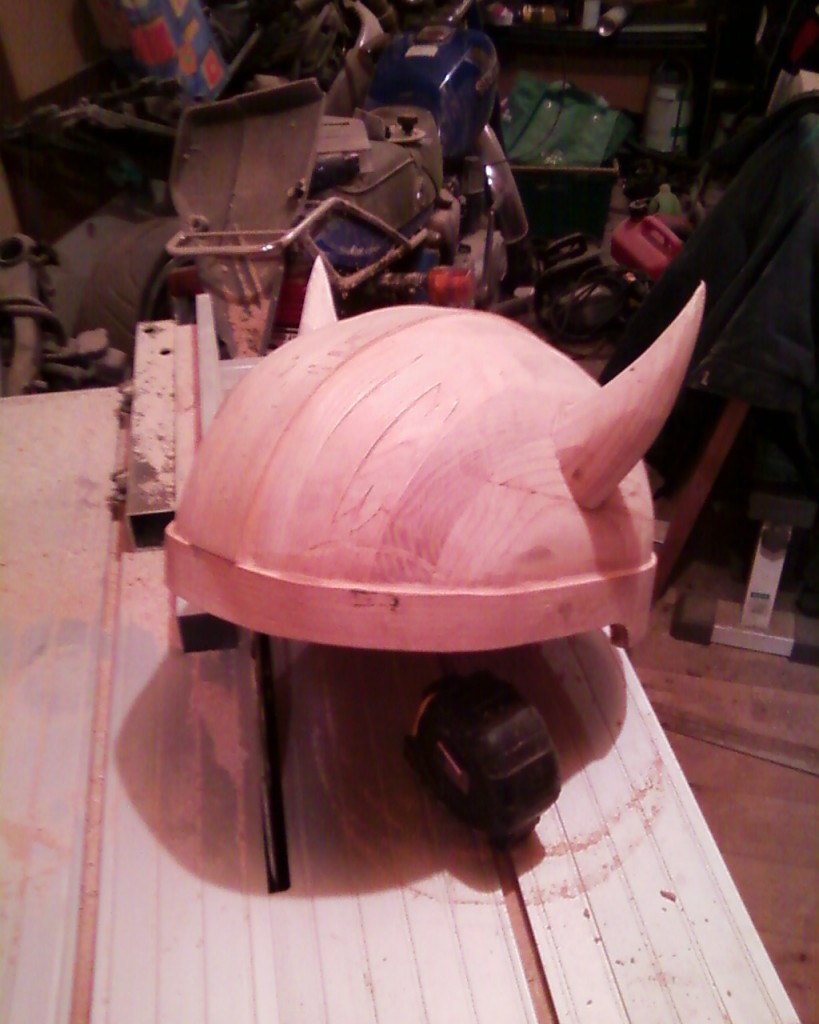
Wooden Skid Lid

Wooden Skid Lid


I plan to put more details up, let me know if you want to know more. I need some encouragement.

Captions and borders on WordPress Images

By Andy the stuff doer

Just a quick one.

The Theme I’m using must be from the dark ages, it hasn’t got the code in the CSS to format the border and caption to images inserted in to a post.

A quick search, and I found http://designm.ag/tutorials/wordpress-caption/. Easy to follow  instructions.  Just copy the code, from the Kubrick theme, and paste it in to your theme CSS.  When it’s there all sorts of weird and wonderful things can be done to the formating.

Hey presto it works.

How to color wood with dye and stain to match an older finish.

By Andy the stuff doer

This isn’t the route that the DIY sheds are forcing most people to go down.

I’ve finished building a staircase up to loft conversion in a style to match the existing stairs and banister rail. The original Victorian stairs are, I think, Canadian red wood. It’s been stained dark and varnished many years ago.

The images below show the new bare wood and the existing stair color I want to match.
Victorian Stair newel and spindels dark wood finish

Victorian Stair newel and spindels dark wood finish

The old timber is red by nature, this redness is clearly visible although the overall effect is dark. The new timber is light yellow in color.
Replica Victorian Newel and spindles, bare wood

Replica Victorian Newel and spindles, bare wood

 The grain on the original is really well defined with contrasting deep amber against almost black.

To get this same coloring on modern yellow timber is something that DIY sheds don’t cater for. If you use common products straight from the tin the results will be bland areas of patchy color.

 Now I’m going to put you off the modern products that the regular DIY outlets sell. The varnish you commonly find is advertised as “Quick Drying”. It’s acrylic based, it does dry quickly but isn’t particularly hard wearing, with little resistance to moisture. For a quick tarting up job it’s fine but I want a finish that will last. It’s available in various colors but using it to get a consistent finish that the beauty of the wood can shine through is a nightmare. It doesn’t flow as the drying process starts so fast, brush strokes are almost impossible to eliminate and you can’t keep a “wet edge” on anything but a really small job. Without a “wet edge” you end up effectively adding a second coat to parts of the job and so you get an ugly patchiness.

 That’s my opinion anyway, please free to comment and disagree if your experience is different.

The Varnish you need to find is “Polyurethane”. It’s the stuff that can up to 24hr to dry, this means its workable for longer so you can get an even finish. The brush strokes can also disappear as is flows into an even finish after it’s applied. The down side is, it can run if it applied too thick. The trick is: Thin coats well brushed out.

I had to find polyurethane varnish/stain on-line as it’s not available in my local shops. I found “Rustins” is widely available, the supplier I found was www.Tools-Paint.com

The other product I’m using is Wood Dye (This did confuse me a few years because when I was lad it was called Stain. Stain is what they now call colored varnish). This stuff is a thin colored liquid that soaks in to the wood, unlike varnish that sits on the surface. There’s good and bad versions of this about. I think cheaper versions have the color more as a solid in suspension that doesn’t soak in properly. The dye I’ve used is from Wickes and has Napilia as the solvent.

The Method

  1. Prep the wood. It has to be bare wood and well sanded and clean. Take some time over the prep, make sure all traces of glue are removed from the surface.

  2. Apply the wood dye. I use a brush to cover the surface and get in to the nooks and crannies

    Dark Oak Wood Dye on yellow softwood

    Dark Oak Wood Dye on yellow softwood

  3. After about 5 minutes letting the dye soak in, wipe off any excess with a cloth. ( The dye soaks in to grain of the wood, the more open the cell structure the darker it gets. The dense part of the grain takes very little of the dye, so the contrast is enhanced.) Lookin Good! The “Dark Oak” stain is almost black at its darkest but still nearly yellow on other parts of the grain.

  4. Open the windows up and come down from the solvent based high…. Joking – make sure you’ve got good ventilation coz it’s powerful stuff.

  5. When fully dry. Apply the varnish. I’ve used Mahogany colored, to give a rich amber colour to the lighter parts of the grain.

    Newel part Dyed part Dyed and vanish Stained

    Newel part Dyed part Dyed and varnish Stained

  6. Finish off with a couple of coats of clear polyurethane varnish, not forgetting a light rub down with wire wool between coats.

 This is how I’ve achieved the result I wanted, after some testing. Addition coats of dye and or stain would modify the results.

 It’s a lengthy process but the results are spectacular and long lasting.

 I hope you find this technique useful. Let me know how you get on.

If You want to comment on environmental issues to the product I’ve used, PLEASE DO.